


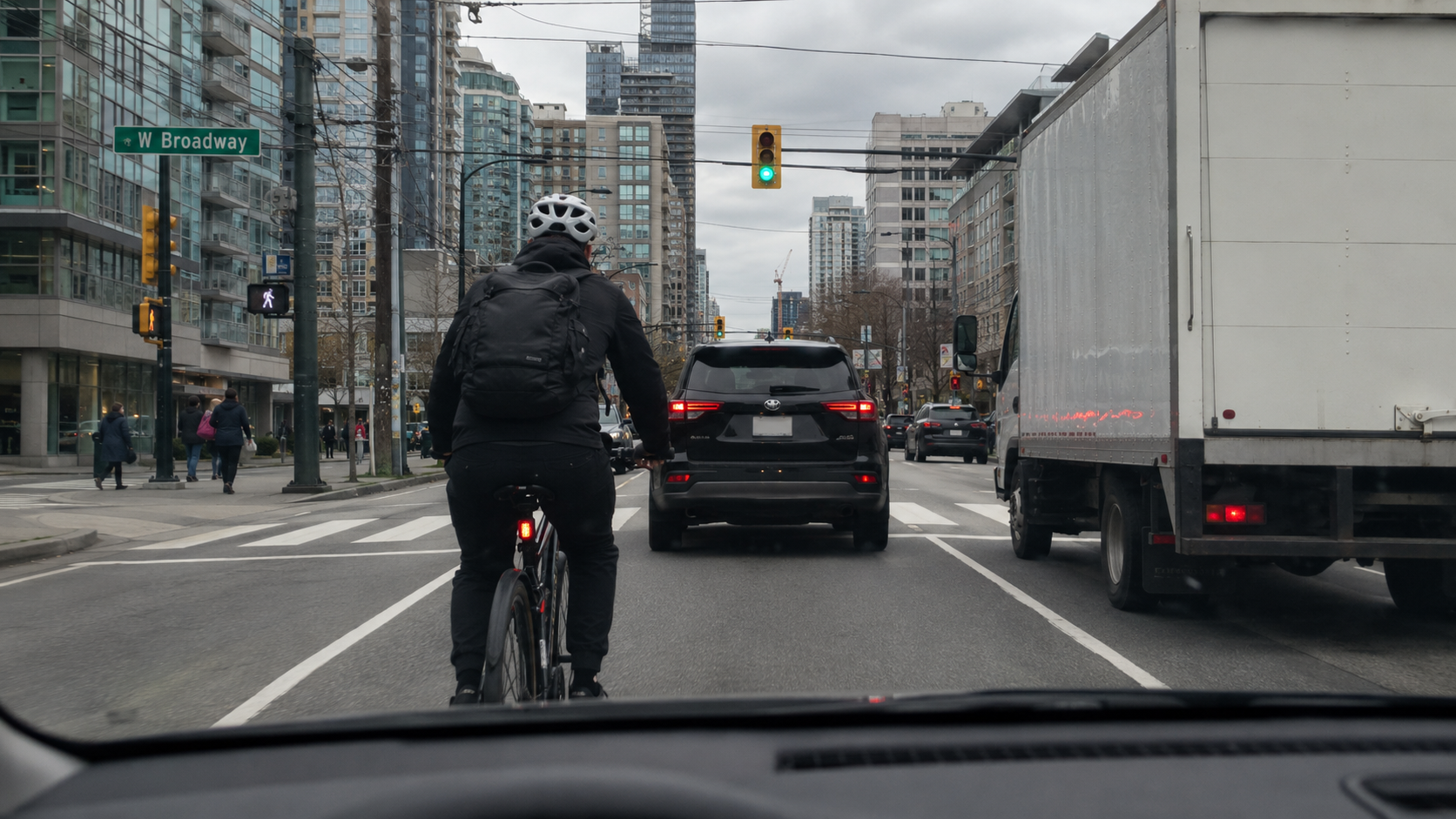
You may have purchased an electric bicycle for commuting, deliveries, recreation, or getting around your neighborhood without realizing that New Jersey recently changed the rules.
Perhaps your teenager rides an e-bike to school or a friend’s house. Maybe you use one to travel through East Brunswick, New Brunswick, Edison, or another community where e-bikes have become increasingly common. Now you are trying to determine whether the bicycle must be registered, whether the rider needs a license, and what could happen if the police issue a ticket.
New Jersey approved its new e-bike law in January 2026 and gave newly affected riders and owners six months to obtain any required license, registration, or insurance. The New Jersey Motor Vehicle Commission began issuing e-bike licenses and registrations in June, before the compliance period ended in July 2026.
The rules depend on the rider’s age and licensing status, how the bicycle operates, and where it is used. Before riding, registering a bicycle, or responding to a ticket, you should understand which requirements apply.
What Does New Jersey’s New E-Bike Law Require?
New Jersey now requires low-speed electric bicycles and motorized bicycles to be registered before they are operated on public highways or public lands. Motorized bicycles must also be insured.
A person younger than 15 cannot legally operate either type of bicycle. Riders who are 15 or 16 must possess a valid motorized-bicycle license or permit. A rider who is 17 or older must have a valid basic driver’s license, motorized-bicycle license, or qualifying permit.
There is a limited licensing exception for certain shared rentals. A rider who is at least 16 does not need a license when renting a low-speed electric bicycle from a shared-bike company operating under a contract with a local government.
That exception does not apply to every rental or to a privately owned e-bike. Before relying on it, confirm that the bicycle is part of a qualifying shared rental program.
Is Your E-Bike a Low-Speed Bicycle or a Motorized Bicycle?
The bicycle’s classification determines whether insurance is required and can affect where it can be operated.
A low-speed electric bicycle has operable pedals and a motor that assists only while the rider is pedaling. The assistance must stop when the bicycle reaches 20 miles per hour.
The motorized-bicycle category includes certain gasoline-powered bicycles and electric models that:
- Have a motor that assists while the rider pedals or can propel the bicycle by throttle at a speed of no more than 15 miles per hour;
- Provide pedal assistance at speeds between 21 and 28 miles per hour on a flat surface; or
- Use a throttle to travel faster than 15 miles per hour but no faster than 28 miles per hour on a flat surface.
Two bicycles can look nearly identical but fall under different rules because of their throttle operation, assisted speed, or motor design.
If you are uncertain which category applies, review the manufacturer’s label, operating manual, and motor specifications. Those details can matter when registering the bicycle or responding to a ticket.
Who Needs an E-Bike License in New Jersey?
If you are 17 or older and already possess a valid basic driver’s license, you do not need a second license solely to operate an e-bike.
If you are 15 or 16, or you are 17 or older without a valid driver’s license, you generally need a motorized-bicycle license or permit before operating a privately owned e-bike. Obtaining that credential requires identification, knowledge and vision tests, a permit period, and a road test.
Parents should not assume that a teenager can legally operate a privately owned e-bike simply because the teenager knows how to ride it. The rider must be at least 15, and the appropriate license or permit must be in place.
Does Your E-Bike Have to Be Registered or Insured?
Low-speed electric bicycles and motorized bicycles must be registered before they are operated on New Jersey’s public highways or public lands.
The owner generally must provide identification, a completed registration form, proof of ownership, parental consent when required, and proof of insurance for a motorized bicycle.
Ownership can be more difficult to document when the bicycle was purchased used, received as a gift, or bought online without conventional paperwork. If standard records are unavailable, gather what you have and follow the NJMVC’s process. Do not create or alter documents to fill the gap.
Insurance depends on the bicycle’s category. A qualifying low-speed electric bicycle must be registered but does not require separate liability insurance. A motorized bicycle must be registered and insured.
When operating an e-bike with its motor engaged on a New Jersey highway, the rider must possess a valid license and proof of registration. A motorized-bicycle rider must also carry the applicable insurance identification card.
Do not rely solely on terms such as “commuter bike,” “Class 2 e-bike,” or “electric bicycle.” Confirm the model’s throttle operation and maximum motor-assisted speed before assuming that insurance is unnecessary.
Can You Ride an E-Bike While Your Driving Privileges Are Suspended?
A suspended driver’s license does not satisfy the licensing requirement for a privately owned e-bike.
The NJMVC also states that a person cannot apply for or receive a motorized-bicycle license while any driving privilege is suspended or revoked. A separate e-bike credential is therefore not an available way to continue riding during the suspension period.
The law contains a limited licensing exception for certain shared low-speed rental bicycles. Even so, riders should not assume that an e-bike is automatically a lawful transportation alternative during a suspension.
The answer can depend on the bicycle, whether it is privately owned or part of a qualifying rental program, where it was operated, and the charge issued by police.
As a New Jersey traffic ticket lawyer and the founder of the Law Offices of Thomas Carroll Blauvelt, LLC, I consider the rider’s licensing status, the type of bicycle involved, and the exact charge together because no single detail determines what happens next.
Can You Receive a Ticket Even With a License and Registration?
A license and registration do not authorize a rider to disregard New Jersey’s traffic, equipment, and location rules.
E-bike riders must wear helmets. Low-speed electric bicycles are also generally subject to traditional bicycle laws, and a low-speed e-bike used from dusk to dawn must have a reflector.
Low-speed e-bikes can generally be used on streets, roadways, and bicycle paths, although state and local authorities can prohibit them on bicycle paths under their control.
Motorized bicycles face additional restrictions. They cannot be operated on interstate highways, certain divided highways, roads with speed limits above 50 miles per hour, railroad rights-of-way, or public land where their use has been prohibited.
A rider can therefore receive a ticket even after satisfying the licensing, registration, and insurance requirements.
What Should You Do After Receiving an E-Bike Ticket?
Read the summons carefully. Identify the offense, the municipal court handling the case, and any court date or response deadline. Do not ignore it.
Preserve photographs of the bicycle and its manufacturer’s label, as well as the model number, motor specifications, purchase records, registration, insurance documents, and information supplied by the seller. These records can help establish the bicycle’s actual operating capabilities.
You should also determine whether the charge alleges that you lacked valid documents or that you failed to carry documents that were valid at the time.
If your license, registration, and required insurance were valid on the date of the alleged offense, you can present them in municipal court. The judge may dismiss the document-possession charge, although the court may still impose costs.
That differs from obtaining the required documents after the ticket was issued.
If the summons can be paid without a required court appearance, payment generally constitutes a guilty plea to the listed offense. Before paying, understand what you are admitting and whether the disposition could affect your driving record, licensing status, or an existing NJMVC matter.
Speak With a New Jersey Traffic Ticket Attorney About an E-Bike Charge
An e-bike ticket can involve the rider’s licensing status, the bicycle’s operating capabilities, the location of the alleged violation, and the offense listed on the summons.
At the Law Offices of Thomas Carroll Blauvelt, LLC, I help people address New Jersey traffic tickets, municipal court charges, and NJMVC licensing issues. If you received an e-bike summons, I can evaluate the charge and explain the considerations that apply to your situation.
From my East Brunswick office, I represent clients in Middlesex County and throughout New Jersey. When you contact my office, you work directly with me.
Before paying the ticket or appearing in court, make sure you understand the charge and how it could affect your driving privileges or an existing NJMVC matter. Use this contact form to schedule a free consultation and case review with the Law Offices of Thomas Carroll Blauvelt, LLC.
Disclaimer: The articles on this blog are for informational purposes only and are no substitute for legal advice or an attorney-client relationship. If you are seeking legal advice, please contact the law firm directly.